Your current position: Home >> Guide for purchasing and application of putty Your current position: Home >> Guide for purchasing and application of puttyGuide for purchasing and application of puttyPublished by:2026-2-4 Categories:Industry news Viewed by: 211 times Putty is a repair material widely used in automotive repair, furniture manufacturing, metal processing, and other fields. Its correct selection and application methods are directly related to the final repair effect and durability. The following is a guide to selection and application operations, compiled based on industry standards and practical experience, to help you complete the task efficiently and safely.
I. Key Points for Selecting Putty 1. Choose the Type Based on the Usage Scenario Ordinary Putty: Suitable for general metal and wood surface repairs, offering high cost-effectiveness. High-Temperature Resistant Putty: Capable of withstanding temperatures up to 300°C, suitable for high-temperature environments such as engine compartments and rail transit equipment. Flexible Putty: Suitable for plastic, fiberglass, and other easily deformable materials, with good impact resistance. Water-Based Paint Special Putty: Compatible with environmentally friendly coating systems, avoiding issues such as bubbling and peeling.
2. Pay Attention to Core Performance Indicators Adhesion: Ensure strong bonding with the substrate (such as steel plates, wood). Hardness and Flexibility: High hardness for scratch resistance, and flexibility to prevent cracking, especially crucial during vehicle operation. Drying Speed: High-quality products can be sanded in 3-5 minutes under natural conditions, improving efficiency. Fillability: Some high-end products have a repair capability up to 4 times that of ordinary putty, with no shrinkage or sand holes. .
II. Preparation before Construction 1. Substrate Preparation Thoroughly remove oil, rust, old paint film, moisture, and dust to ensure a dry and clean surface. Use sandpaper (such as P320) to sand the primer or metal surface to increase roughness and improve adhesion. 2. Tool Preparation Scraper (steel, plastic, rubber material, selected according to shape and elasticity) Sandpaper (P80, P120, P180, P240, P320, etc., from coarse to fine) Mixing tools (putty knife, plastic cup) Protective equipment: gloves, mask, goggles, gas mask (if necessary) 3. Environmental Control Construction temperature: 15–30℃ is recommended to avoid slow curing due to low temperature. Humidity: 50%–70%, as excessive humidity will affect the drying effect.
III. Putty Mixing and Application 1. Mixing Ratio Principle The ratio of main agent to curing agent is usually 100:1.5–3 (weight ratio), subject to the instructions. The common ratio is 100:2, such as Mingya alloy putty; DuPont Speedbond is 10:1% to 3%. Too much curing agent can lead to rapid drying, affecting operation; too little can result in incomplete curing. 2. Mixing Requirements Stir in the same direction until the color is uniform, avoiding the inclusion of bubbles. After mixing, use it up within 5-15 minutes to prevent gel waste. 3. Scraping Techniques Scrape thin layers: control the thickness of each layer at 2-3mm, and scrape the next layer after the previous one dries. Scraper angle: 45°-60° is appropriate, with a smaller angle for flat surfaces to facilitate spreading, and flexible adjustment for curved surfaces. 4. Application Method Pit areas: use a radial pattern, scraping from the center outwards. Large areas: scrape vertically or horizontally to maintain uniformity. Edge and corner treatment: use masking tape for side-by-side application to ensure clear lines.
IV. Avoiding Common Problems Sagging: avoid scraping too thick in one go. Bubbles: press firmly during scraping to expel air. Missed areas: carefully inspect edges and corners.
V. Safety and Storage Construction protection: wear gloves, masks, and goggles throughout the process to avoid skin contact and inhalation of dust. Emergency treatment: If it contacts the skin, immediately rinse with clean water; if it enters the eyes, rinse abundantly and seek medical attention. Storage requirements: Store the putty in a sealed container in a cool, dry place, away from sources of fire and heat. Store the curing agent separately, with an effective storage period of about 6 months.
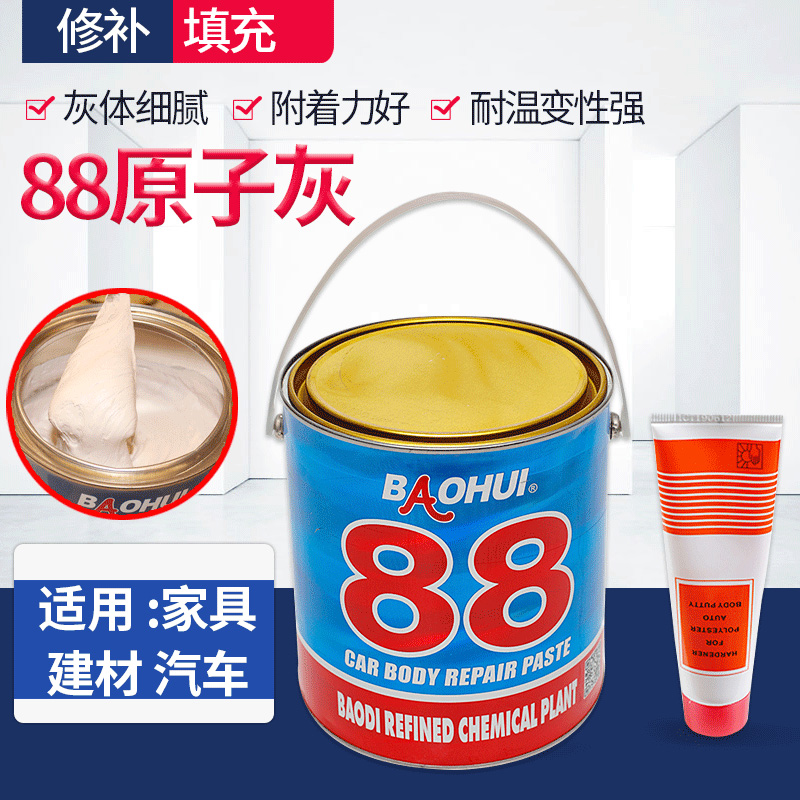
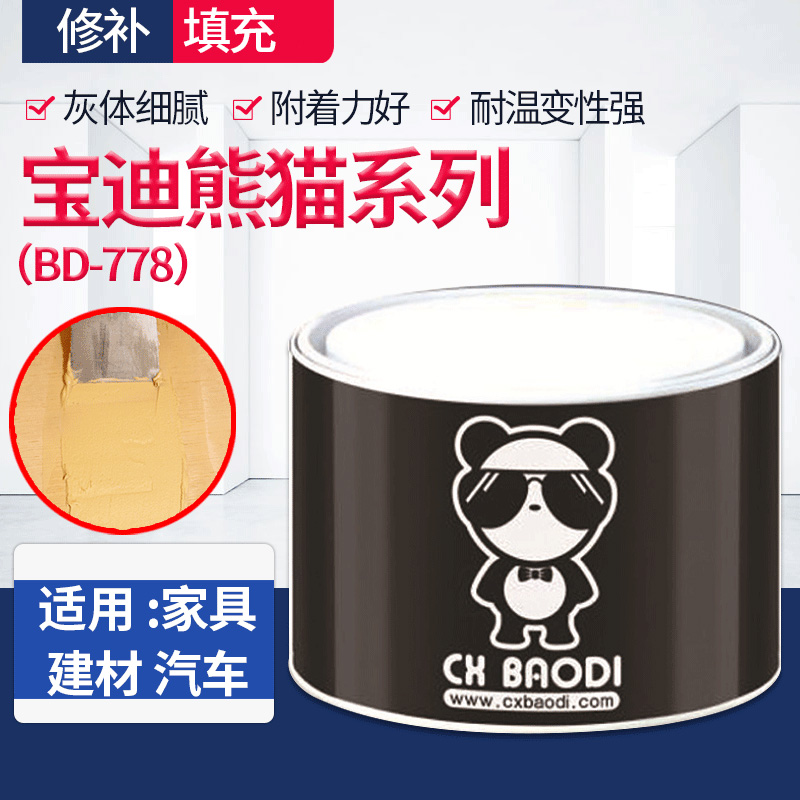
Changxing Baodi Environmental Protection Technology Co., Ltd. is a company specializing in the processing and sales of putty and coatings. As one of the earliest enterprises in China to specialize in the production of putty, our products are characterized by easy sanding, strong adhesion, and fast curing. They are widely used in the manufacturing and repair of automobiles, machinery, ships, furniture, and other industries, and have gained a certain degree of market recognition.
|

 |
 |
About us |
|
Product Categories | |
Contact way Address: 268 Hongchang Road, Changxing County, Huzhou City, Zhejiang Province |
| Copyright © 2020 Changxing Baodi Environmental Protection Technology Co., Ltd all reserved | Web Admin --> >> |



 Home
Home