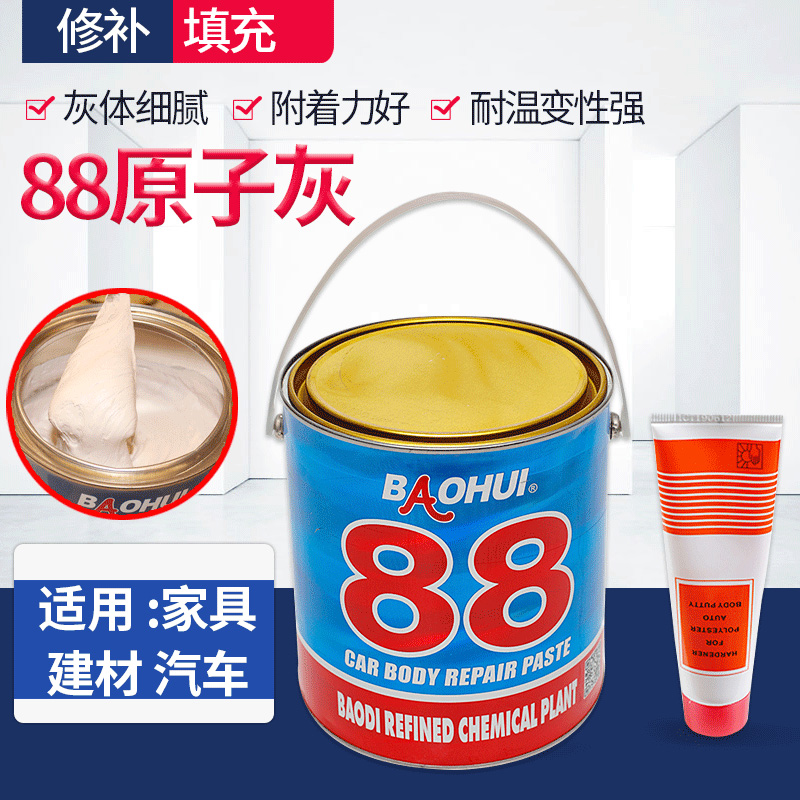
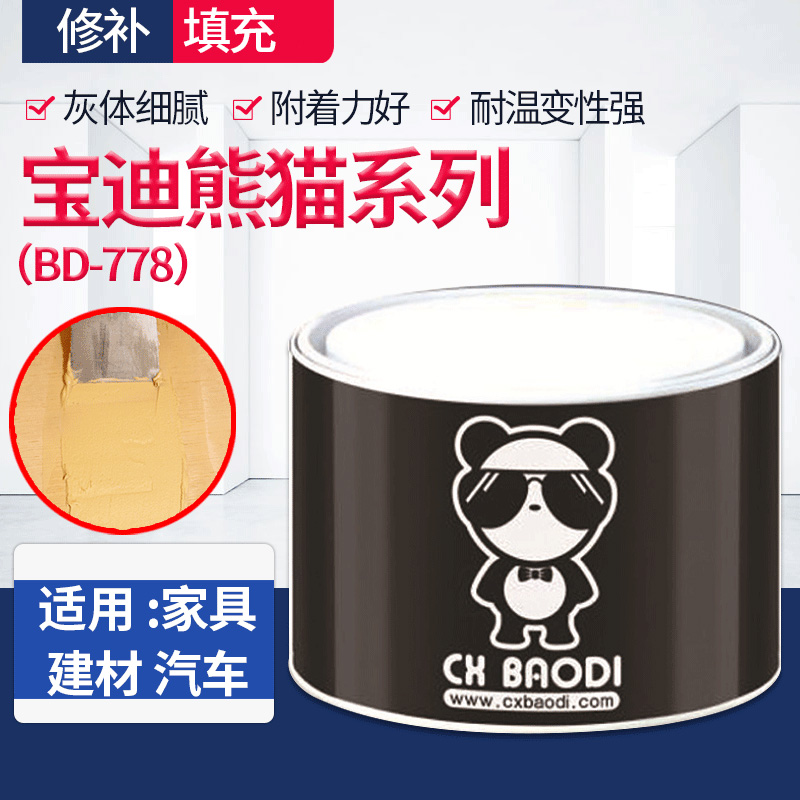
Your current position: Home >> How to prevent issues during the application of putty? Your current position: Home >> How to prevent issues during the application of putty?How to prevent issues during the application of putty?Published by:2026-2-6 Categories:Industry news Viewed by: 222 times Problems in the application of putty can be effectively avoided through systematic preventive measures. The key lies in selecting the right materials, standardizing operations, controlling the environment, and enhancing substrate treatment. The following is a comprehensive prevention plan for common defects, helping you establish a reliable construction quality defense line under complex working conditions such as industrial equipment maintenance.
I. Preventing Blistering: Ensure Dryness and Cleanliness Blistering is often caused by moisture or solvent expansion due to heat. The key to prevention lies in thorough drying and isolating pollution sources. Pre-construction Treatment: Thoroughly remove oil stains, water stains, old paint films, and rust from the substrate surface. It is recommended to use 93# gasoline or a dedicated degreaser for cleaning. For galvanized sheets or unknown materials, select a dedicated putty (such as high-grade putty for galvanized sheets) to avoid interlayer reactions. Material and Process Control: Do not dilute putty with solvents, as this can introduce volatile substances that lead to blistering. Ensure that the putty has fully cured before high-temperature baking. It is recommended to perform low-temperature baking at least 5 hours after scraping. If the environment is humid, extend the drying time or use infrared radiation to assist drying, and avoid immediate construction after water sanding.
II. Preventing Cracking: Control Thickness and Match Substrates Cracking is often caused by internal stress release, and it is necessary to start with the construction method and material compatibility. Scrape in thin layers to avoid thick application: The thickness of each scraping should not exceed 3mm. Wait for the previous layer to be semi-dry before scraping the next layer, reducing shrinkage stress. For high-shrinkage substrates such as wood, use flexible putty or water-based putty, whose elastic cross-linking structure can deform synchronously with the substrate. .
Temperature and Curing Management: After high-temperature baking, do not rapidly cool down. It is recommended to wait for 20–40 minutes for natural cooling before sanding to prevent thermal shock cracking. The addition amount of curing agent should strictly follow a weight ratio of 100:1.5–3. Too much or too little will affect the crosslinking density.
III. Preventing Peeling: Improving Adhesion and Interface Treatment The main cause of peeling is insufficient adhesion, and the core lies in substrate treatment and matching of supporting materials. Substrate pretreatment standards: Metal surfaces must be derusted, degreased, sanded, and roughened to enhance mechanical bite. Old putty and old paint films must be thoroughly removed with a sanding machine and cannot be directly covered. Material matching and construction sequence: It is not recommended to directly spray topcoat on putty. Epoxy primer or anti-oxygen primer should be sprayed first to improve interlayer adhesion. Avoid using unqualified primers, as some primers are incompatible with putty and can lead to delamination.
IV. Preventing Sagging: Optimizing Construction Techniques and Environment Sagging occurs on vertical surfaces or corners, mainly due to excessive coating thickness or improper viscosity. Construction operation specifications: Adhere to the principle of "thin coating and multiple coats," with each coat thickness controlled within a reasonable range (generally ≤3mm). When constructing on vertical surfaces, apply thinly in a horizontal direction first, then tidy up in a vertical direction; for corners, apply in spots first and then spread out to reduce accumulation. Environment and Viscosity Adjustment: Control the construction temperature at 10–35℃ and humidity ≤75% to avoid enhanced fluidity caused by high temperature and humidity. Adjust the viscosity according to the construction method. When spraying, keep the spray gun distance at 15–25cm and move at a constant speed, avoiding stagnation.
V. Preventing Difficulties in Grinding: Selecting High-Quality Materials and Proper Procedures Unsmooth grinding is often due to poor material quality or improper timing, which requires control over material selection and grinding pace. Material Performance Requirements: Preferentially choose water-based putty with high hardness (such as 2.5H) and low shrinkage rate (<0.3%), which has excellent grinding performance and can be fine-ground with 320-grit sandpaper. High-solid content (85%) products can fill 5mm cracks in one go, reducing the number of construction times and grinding burden. Key Points for Grinding Operation: Ensure that the putty is completely dry before grinding. Usually, it dries to the surface in 30 minutes at 25℃ and can be ground after 3 hours. Grind in the order of "coarse → medium → fine":" Coarse grinding: 80–120-grit sandpaper to quickly remove protrusions; Medium grinding: 180–240-grit to eliminate marks; Fine grinding: 320–400-grit to achieve a natural transition with the surrounding paint surface.
VI. Comprehensive Prevention Strategy: Establishing Standardized Construction Procedures To systematically reduce the risk of rework, it is recommended to implement the following standard procedures in equipment maintenance scenarios: Material Selection Select matching atomic gray based on the type of substrate (metal/wood/plastic) and temperature environment (normal temperature/high temperature) Substrate Preparation Cleaning → Rust Removal → Oil Removal → Grinding → Dust Removal, ensuring the surface is free of impurities Mixing Ratio Strictly follow the mixing ratio of 100:1.5–3 for the main agent and curing agent, stirring until the color is uniform Scraping Process Apply thin layers, compacting and exhausting each layer to avoid bubbles and thick coating Drying Control Natural drying for 2–3 hours or with infrared assistance to ensure complete curing Grinding Inspection Gradually grind, check the flatness by hand touch + side light, and promptly correct defects
|

 |
 |
About us |
|
Product Categories | |
Contact way Address: 268 Hongchang Road, Changxing County, Huzhou City, Zhejiang Province |
| Copyright © 2020 Changxing Baodi Environmental Protection Technology Co., Ltd all reserved | Web Admin --> >> |



 Home
Home